Hands examining layered textile fabrics in different colors, representing Ecosis' decades of experience in industrial polyester manufacturing.

About Ecosis

Built by people who have been running polyester at industrial scale for thirty years.

The Problem

Polyester is the most produced textile fibre in the world. It is also one of the least recycled, not because it cannot be recycled, but because no one had built the right process to do it at scale.

The Solution

Ecosis Was Built to Solve the Problem the Industry Has Been Ignoring.

Ecosis exists because a team with thirty years of polyester manufacturing experience decided that was unacceptable

Hands examining layered textile fabrics in different colors, representing Ecosis' decades of experience in industrial polyester manufacturing.

About Ecosis

Built by people who have been running polyester at industrial scale for thirty years.

The Problem

Polyester is the most produced textile fibre in the world. It is also one of the least recycled, not because it cannot be recycled, but because no one had built the right process to do it at scale.

The Solution

Ecosis Was Built to Solve the Problem the Industry Has Been Ignoring.

Ecosis exists because a team with thirty years of polyester manufacturing experience decided that was unacceptable

Every problem is an opportunity in disguise. Filatex was founded on that principle in 1990. Ecosis is what that principle looks like in 2026.

Built on Three Decades of Polyester Manufacturing.

Not Built in a Lab.

Not Built in a Lab.

Ecosis is the recycling platform of Filatex India Limited, one of India's top five polyester filament yarn manufacturers, with over 30 years of continuous production experience.

This is not a technology licence in search of a factory. Ecosis was built by people who have been running polyester at industrial scale for generations.

Ecosis is the recycling platform of Filatex India Limited, one of India's top five polyester filament yarn manufacturers, with over 30 years of continuous production experience.

This is not a technology licence in search of a factory. Ecosis was built by people who have been running polyester at industrial scale for generations.

Dahej, Gujarat

Facility

LEED Gold Certified

Production Capacity

400,000+

Tonnes/year

2T

3T

5T

6T

~

200

200

M $

(Filatex group)

Annual Revenue

Parent Company

Filatex India Limited

NSE/BSE listed

10

10

+

years in polyester production

Credit Rating

AA – (institutional grade)

Ecosis Commercial Scale

26,250 MTPA

Commissioning

SEP’26

OCT’26

NOV’26

DSIR-recognised

R&D Centre

Dahej, Gujarat

Facility

LEED Gold Certified

Production Capacity

400,000+

Tonnes/year

2T

3T

5T

6T

~

200

200

M $

(Filatex group)

Annual Revenue

Parent Company

Filatex India Limited

NSE/BSE listed

10

10

+

years in polyester production

Credit Rating

AA – (institutional grade)

Ecosis Commercial Scale

26,250 MTPA

Commissioning

SEP’26

OCT’26

NOV’26

DSIR-recognised

R&D Centre

Our Vision

Turning Waste into Value, One Fibre at a Time.

Turning Waste into Value, One Fibre at a Time.

Driving sustainability by creating high quality regenerated polyester products through investments in innovation, circularity and green technologies.

Our Mission

Our Mission

Engineered for the Hardest Waste Streams.

Engineered for the Hardest Waste Streams.

Being Validated at Industrial Scale.

Being Validated at Industrial Scale.

Textile-to-Textile, Not Bottle-to-Textile

Our feedstock is polyester textile waste. Not PET bottles.

This distinction matters: textile waste is more complex, more contaminated, and more variable than bottle feedstock. Building a process that handles it reliably is the hard problem.

We solved it.

Large-scale textile manufacturing facility with automated production equipment arranged in parallel processing lines.
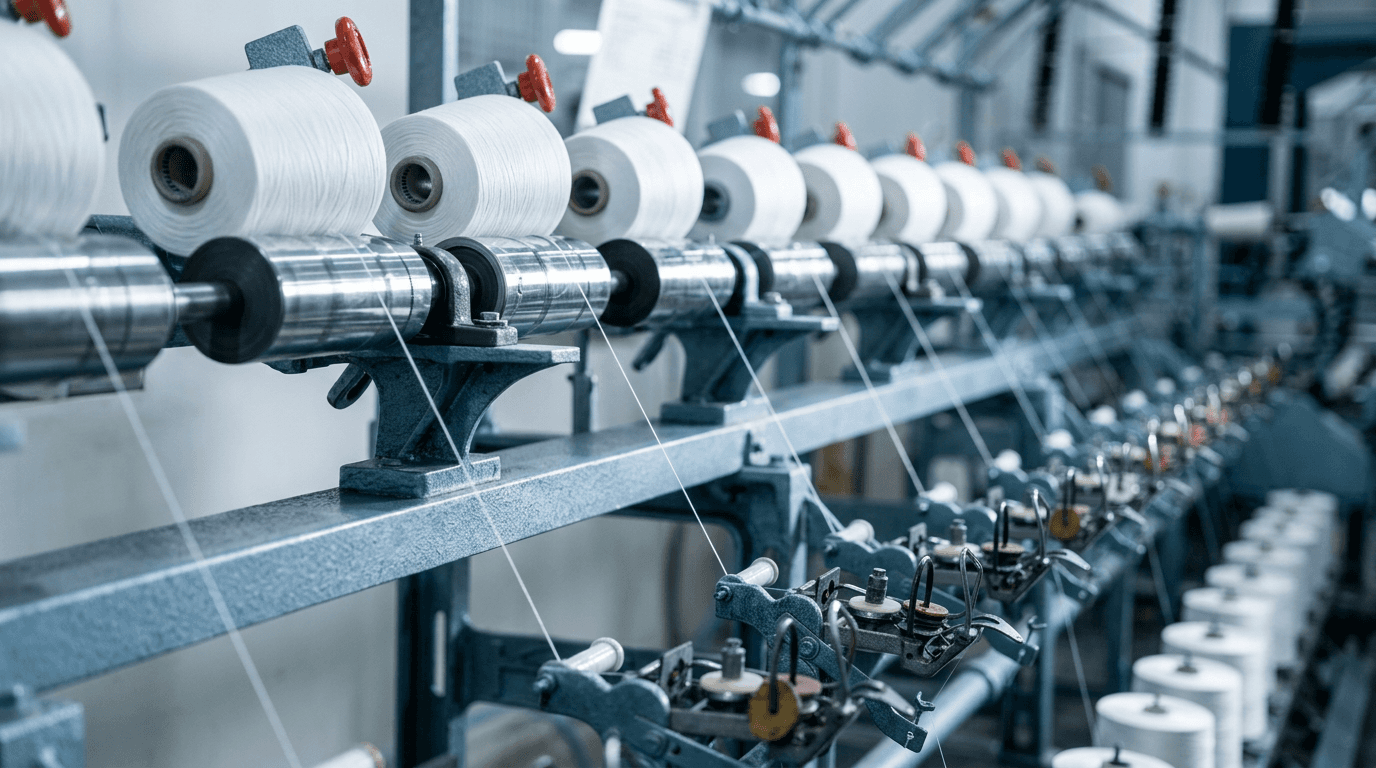
Industrial textile manufacturing line with polyester yarn spools feeding automated production machinery.
Illustration of a breathable textile membrane showing moisture vapor passing through while blocking larger particles and contaminants.
Close-up of knitting needles interlacing polyester fibers into a technical textile fabric.

01

02

04

03

Textile-to-Textile, Not Bottle-to-Textile

Our feedstock is polyester textile waste. Not PET bottles.

This distinction matters: textile waste is more complex, more contaminated, and more variable than bottle feedstock. Building a process that handles it reliably is the hard problem.

We solved it.

01

02

04

03

Our environmental performance has been independently measured through a Life Cycle Assessment conducted in accordance with ISO 14040 and ISO 14044 - the international standards governing LCA methodology and reporting.

69%

85%

59%

54%

Reduction in CO₂-equivalent emissions

Reduction in fossil resource consumption

Reduction in water consumption

Reduction in circular footprint

Circularity Is Our Core Product.

These Are the Numbers That Prove It.

The full LCA summary is available to brand partners and procurement teams upon request. We do not make claims we cannot substantiate with data.

GRS Certification

Global Recycled Standard certifying our feedstock sourcing and chain of custody for recycled content claims

ISO 14040 / 14044

LCA conducted to international environmental assessment standards

LEED Gold

Commercial facility at Dahej being built to LEED Gold standards, certification on commissioning

EU EPR Readiness

Processes aligned with EU Extended Producer Responsibility requirements and Digital Product Passport (DPP) frameworks

Our Facility

The Ecosis commercial plant at Dahej, Gujarat is designed with environmental performance as a design constraint, not an afterthought. LEED Gold certification reflects the standards applied to energy, water, and materials management across the facility.

Exterior view of the Ecosis headquarters building with modern architectural design and the Indian national flag in the foreground.